 admin1
 There’s something a little magical about combining sourdough, chocolate, and espresso—it’s like your favorite bakery treat decided to level up and grow a personality. This Chocolate Chunk Espresso Sourdough is rich, slightly tangy, deeply aromatic, and studded with melty pockets of chocolate that make every bite feel indulgent but still wholesome. It’s the kind of loaf you slice thick, toast lightly, and savor slowly with a cup of coffee on a quiet morning.
Ingredients
For the dough:
- 500g bread flour
- 350g water (room temperature)
- 100g active sourdough starter
- 10g salt
- 30g sugar (optional, but enhances flavor)
- 2 tablespoons espresso powder (or very finely ground coffee)
Add-ins:
- 150g dark chocolate chunks (not chips—chunks melt better and create pockets)
Step 1: Mix the Dough
Start by combining the water and sourdough starter in a large bowl. Stir until the starter dissolves into a cloudy mixture. Add the flour, sugar, and espresso powder, mixing until no dry bits remain. The dough will look shaggy and slightly sticky—that’s exactly what you want.
Cover the bowl and let it rest for 30 minutes. This rest period, called autolyse, helps develop gluten naturally and makes the dough easier to work with later.
Step 2: Add Salt & Build Strength
After resting, sprinkle the salt over the dough and gently knead it in using your hands. It might feel a little slippery at first, but keep folding it over itself until the salt is fully incorporated.
Now begins the stretch-and-fold process. Over the next 2 hours, perform 4 sets of stretch and folds every 30 minutes. Each time, grab one side of the dough, stretch it up, and fold it over itself. Rotate the bowl and repeat 3–4 times.
By the second or third fold, you’ll notice the dough becoming smoother and stronger.
Step 3: Add Chocolate Chunks
On your final stretch and fold, gently incorporate the chocolate chunks. Try to distribute them evenly without tearing the dough too much. Some chunks may poke through—that’s fine and honestly part of the charm.
Step 4: Bulk Fermentation
Cover the dough and let it rise at room temperature for 4–6 hours, depending on your kitchen temperature. You’re looking for the dough to become puffy, slightly domed, and full of air bubbles.
Because of the espresso and sugar, this dough tends to ferment a bit faster than plain sourdough, so keep an eye on it.
Step 5: Shape the Dough
Lightly flour your work surface and gently turn out the dough. Shape it into a round by folding the edges toward the center, then flipping it seam-side down and tightening it with your hands.
Let it rest for 20 minutes, then perform a final shaping to build surface tension. Place the dough into a floured proofing basket (or bowl lined with a towel), seam-side up.
Step 6: Cold Proof
Cover and refrigerate overnight (8–12 hours). This slow fermentation deepens the flavor and makes scoring easier the next day.
Step 7: Bake
Preheat your oven to 250°C (480°F) with a Dutch oven inside. Once hot, carefully transfer your dough onto parchment paper, score the top with a sharp blade, and place it into the Dutch oven.
Bake covered for 20 minutes, then uncover and bake another 20–25 minutes until the crust is deep brown with slightly caramelized edges.
The chocolate might bubble and caramelize in spots—that’s where the magic happens.
Step 8: Cool & Slice
Let the bread cool completely before slicing. This is the hardest part, but cutting too early can make the crumb gummy.
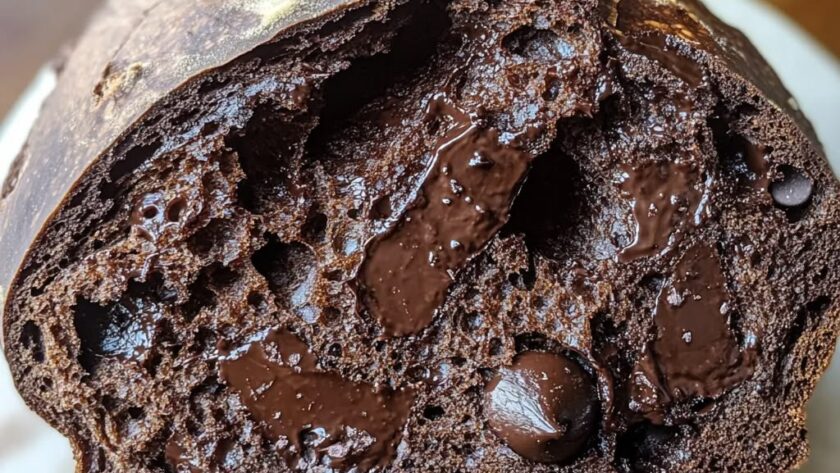
Once ready, slice into it and admire the marbled crumb, melted chocolate pockets, and that faint espresso aroma.
Flavor & Serving Ideas
This loaf walks a perfect line between sweet and savory. The espresso enhances the chocolate without overpowering the sourdough tang. It’s not dessert-level sweet—more like a sophisticated treat.
Try it:
- Toasted with a smear of butter
- With cream cheese for a cheesecake vibe
- As a base for a slightly indulgent French toast
- Paired with your morning coffee for a double espresso hit
Tips for Success
- Use good-quality dark chocolate (70% works beautifully)
- Don’t skip the cold proof—it’s key for flavor
- If your dough feels too sticky, lightly wet your hands instead of adding more flour
- Espresso powder is stronger than brewed coffee—start small if unsure